
I have a fear to speak in public and in presentations. How can you help me?
Thank you very much for contacting us with your question!
Speech anxiety is a common problem and can be very limiting, particularly in situations where you are expected as a student to give oral presentations.
There are various ways to get help, depending on what is available at your local student health service. Some student health services offer so-called “Dare to Speak” groups, where in a safe environment you can learn more about speech anxiety and practice, step by step, challenging yourself to manage it using different strategies. You can also contact a healthcare centre to request treatment for speech anxiety if it is severe enough to prevent you from, for example, completing your studies. Seeking help at a healthcare care centre requires that you are entitled to Swedish healthcare, either because you have a Swedish personal identity number or otherwise have access to the healthcare system. Don’t hesitate to seek help if you need it.
There are also some things you can try on your own to manage your speech anxiety differently:
- Acceptance
An important starting point when you are practicing becoming more comfortable with oral presentations is to focus on changing what you can influence. What you cannot influence needs to be approached with acceptance. Acceptance is not about giving up or being passive, but about relating wisely to what you cannot control. Since we cannot influence the body’s automatic response to perceived threats—such as feeling afraid, having an increased heart rate, getting a dry mouth, or a trembling voice and body—it is wise to try to accept (allow) this reaction.
- Safety behaviors
In order to reduce the risk of embarrassing ourselves or failing during presentations, we tend to use different strategies. These are called safety behaviors and may include trying to memorize exactly what we are going to say, monitoring what is happening in our body and how others seem to react to us (“can they see that I’m sweating?”, “do they think I look strange?”, “what if I have trouble breathing/stutter/forget what to say”), speaking quietly so the trembling in our voice won’t be noticed, or speaking quickly to get it over with. These behaviors can feel comforting in the moment but may contribute to maintaining the fear of speaking, because we act as if the situation is truly dangerous.
- Act differently
Try actively choosing to challenge urges to use safety behaviors—breathe a bit more slowly, speak a bit louder, take short pauses to think when needed, and speak a little more slowly.
- External focus
Something that, contrary to what we might believe, can free up mental energy and help prevent reinforcing the fear is to actively direct your focus outward—to what is happening around you in the moment. This is instead of focusing on what feels threatening and looking for signs that something is wrong. For example, try listening to others’ presentations while waiting for your turn, or direct your attention to things you can see or hear around you.
- Evaluate neutrally
After presentations, it is common to criticize yourself and focus on what went poorly. Try not to let the memory of how it felt dictate your evaluation. Instead, focus on what you can control: decide whether you said roughly what you wanted to and whether you managed to, for example, take pauses, look up from your paper/computer a few times, and speak a bit more slowly than usual. Base your evaluation on the goals you set for your presentation.
- Watch out for emotion-based goals
Good goals when working with speaking anxiety are those you can influence. Less helpful goals are, for example, “not feeling worried/anxious,” since we cannot control automatic reactions to what our brain perceives as threatening—even if we rationally know it is not.
- Reward yourself afterward
Decide to do something you enjoy regardless of how you feel you performed during your presentation. The important thing is that you are practicing doing something difficult. Try, as much as possible, to let go of thoughts about how “good” the presentation was.
Best of luck on your journey toward feeling more comfortable with oral presentations!
Licensed psychologist
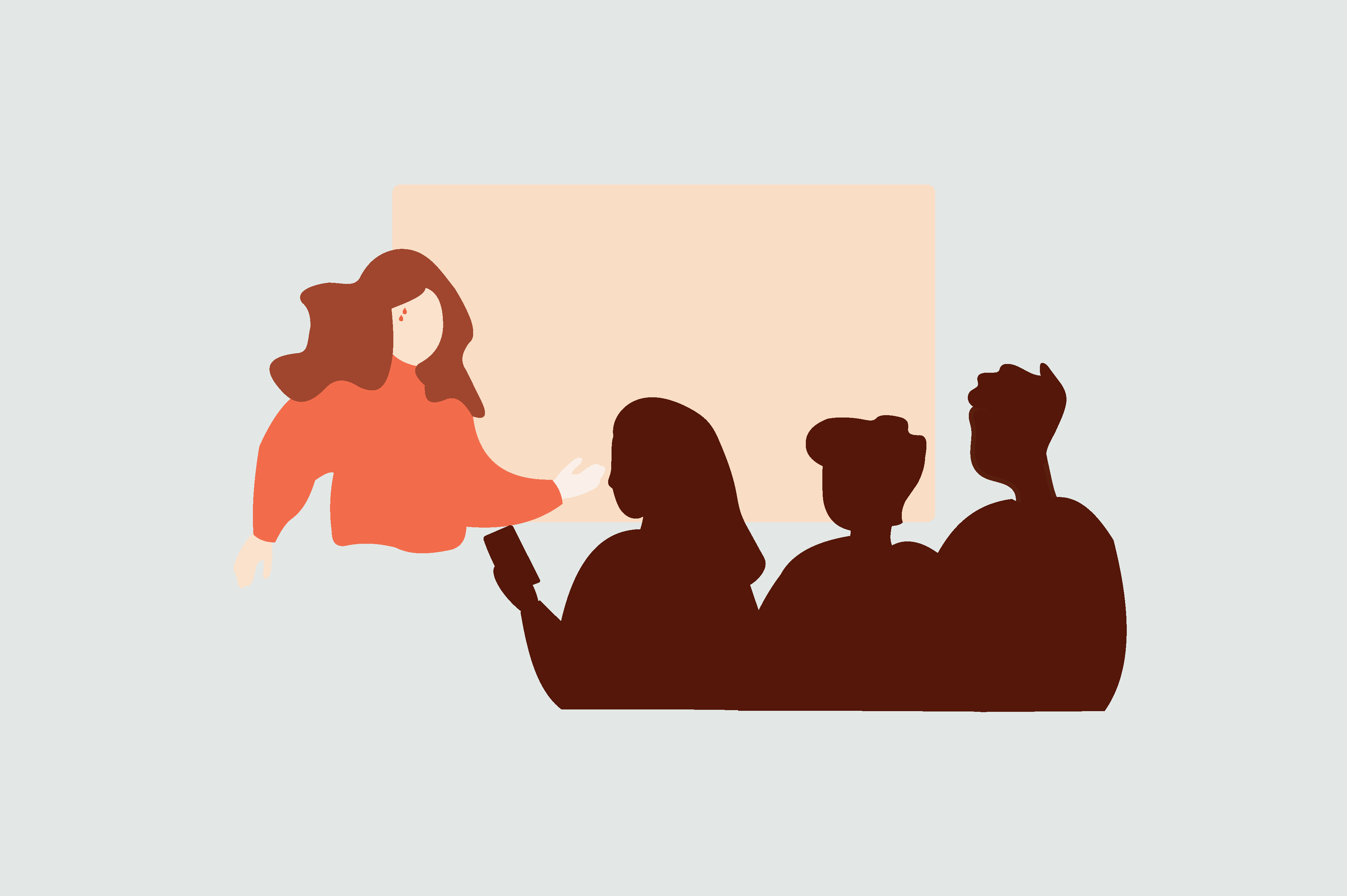
Public speaking anxiety
Students with public speaking anxiety face various kinds of difficulties. They may involve managing oral presentations or participating actively in seminars and other group discussions. Here is self-help material to overcome public speaking anxiety.